FAQ
How long have you been in the market?
Why should you choose us?
Do you work with clients throughout the entire cycle of game development?
WHAT SETS YOUR GAME DEVELOPMENT AGENCY APART FROM OTHERS?
What should startups look for in a game development partner?
Startups should select partners who provide tangible results rather than empty promises. Key considerations include:
- • Proven experience. in actual game releases, not just concepts.
- • Transparency. in costs, timelines, and deliverables.
- • Honest feedback. willingness to provide honest feedback on your idea’s feasibility.
- • Avoid unrealistic promises. avoid partners who focus on short-term trends.
Tip: If a potential partner cannot clearly explain their development approach, consider other options.
Are there hidden costs we should know about?
What's the cost difference between 2D and 3D games?
2D Games: Usually have lower production costs due to simpler asset creation. Characters, animations, UI, and environments require fewer stages and less technical complexity.
3D Games: Typically cost more due to a complex pipeline that includes 3D modeling, texturing, rigging, lighting, shaders, and performance optimization across devices. This increases both development time and budget.
Tip: Choose 2D for faster, more budget-friendly projects, and 3D for richer visuals and immersive gameplay, keeping in mind the higher costs.
Do you offer fixed-price or hourly billing?
We work with two cooperation models:
Fixed Price:
- • Project scope and services are defined clearly from the start.
- • Changes are handled through formal Change Requests.
- • Single price divided per milestone.
- • Ideal for projects with detailed requirements, fixed deadlines, and limited budgets.
Time & Material (T&M):
- • Flexible scope and timeline.
- • Clients are billed for actual hours based on team rates.
- • Best for long-term projects with evolving or uncertain requirements.
- • Offers maximum flexibility and full budget transparency.
Tip: Choose Fixed Price for strict budgets and deadlines, or T&M for flexible, evolving projects.
Can you provide a detailed cost breakdown?
Yes, we can provide a detailed cost breakdown based on a full Game Design Document (GDD).
- • Full GDD: Allows us to give an accurate quote with a detailed cost breakdown.
- • Rough idea or short concept: We can provide a ballpark estimate, but an exact breakdown isn’t possible without full details.
Tip: The more complete your game description, the more precise and helpful our cost breakdown will be.
What factors affect game development cost?
Game development costs depend on several key factors:
- • Art & Visuals: Number and quality of characters, locations, assets, animations, and special effects.
- • Development Scope: Single-player vs multiplayer, type of game mechanics, number and type of mini-games.
- • Tools & Infrastructure: Analytics systems, back-office features, and platform-specific requirements.
Tip: Unique art or complex multiplayer features can significantly increase costs, while reusing assets and standard animations helps save budget.
Do you create games for financial literacy education?
Can you develop games for language learning?
Do you create games for mental health and wellbeing?
Can you develop accessibility-focused games?
Do you create games for museums and cultural institutions?
Can you develop games for employees onboarding and training?
Do you create branded games for marketing campaigns?
Do you create simulation games for professional training?
Can you develop games for healthcare and medical training?
Do you handle server infrastructure for online games?
Can you integrate analytics and tracking?
How do you optimise games for mobile performance?
Can you add in-app purchases and monetisation?
Do you develop VR and AR games?
Can you integrate multiplayer features?
Do you offer 2D and 3D game development?
Can you port existing games to new platforms?
Do you specialise in Unity, Unreal Engine, or both?
Can you develop games for multiple platforms simultaneously?
What makes your company different from other game developers?
At Whimsy Games, we bring your ideas to life by tailoring our process to your goals and target audience.
We combine creative design with technical expertise, ensuring games look great and run smoothly on all platforms.
Transparency and collaboration are key: you’ll always know what’s happening, from concept toWe create games that engage players and encourage ongoing participation, rather than simply delivering a finished product. “finished and ready.”
What information do you need from us to start?
To begin a game project efficiently, please provide the following:
- • Game concept: A clear description of the idea, the target audience, and the core gameplay mechanics.
- • Scope and features: Key game mechanics, levels, platforms, and any desired functionalities.
- • Design preferences: Visual style, assets, and UI/UX ideas to guide the creative process.
- • Timeline and budget: Expected deadlines and approximate budget range to plan resources effectively.
- • Existing materials: Any Game Design Documents (GDD), prototypes, or pre-made assets that can be used.
Note: The more detailed and clear your initial information, the easier it is to assess feasibility, plan development, and launch the project efficiently.
Can you help with game marketing and user acquisition?
We do not offer in-house marketing or user acquisition services. However, we can guide you or connect you with trusted partners who specialize in game promotion and player acquisition.
Tip: Engage marketing specialists early to maximize your game’s reach and success, and feel free to request guidance.
Do you provide ongoing support after game launch?
Yes, we provide ongoing support and maintenance to ensure games run smoothly after launch:
- • Bug fixes & updates: Address issues and release patches as needed.
- • Performance monitoring: Track game stability and optimize performance.
- • Content updates: Add new features, levels, or events to keep players engaged.
- • Analytics & feedback: Use player data to inform improvements and updates.
Tip: Plan for post-launch support from the start to keep your game stable, engaging, and continuously improving.
How do you handle urgent deadlines or rush projects?
We manage urgent projects by prioritizing critical tasks and allocating team resources efficiently:
- • Prioritization: Focus on the most important tasks first.
- • Team allocation: Bring in additional developers or designers if needed.
- • Clear communication: Provide clients with regular updates on progress and approvals.
- • Accelerated testing: Speed up QA without compromising quality.
Tip: We can manage urgent projects, but advance planning ensures a safer and smoother process.
How do you handle project management and communication?
We provide transparent project management and consistent communication. Clients receive a dedicated project manager, regular updates, and access to collaborative tools for feedback and progress tracking. This approach keeps all stakeholders aligned and the project on schedule.
Tip: Establish communication methods and reporting frequency at the outset to maximize efficiency.
What's your game development process from concept to launch?
At Whimsy Games, we manage projects through every stage of development:
- • Concept & Planning: Define the game idea, goals, and target audience.
- • Design: Create visuals, UI/UX, and core mechanics.
- • Development: Implement gameplay features and technical systems.
- • Testing & QA: Ensure functionality, performance, and compliance.
- • Launch & Post-launch Support: Deploy the game, fix issues, and provide updates.
Tip: Align on goals and features early to ensure a smooth, efficient development process.
Can you develop STEM-focused educational games?
Yes, at Whimsy Games we develop STEM-focused educational games that teach science, technology, engineering, and math concepts through interactive gameplay. Our games blend engaging mechanics with learning objectives to make complex topics accessible and enjoyable.
Tip: Define learning goals for each STEM subject early in development to ensure the game effectively teaches and reinforces key concepts.
What gamification strategies work best for learning?
Effective gamification strategies include:
- • Progression and leveling: Reward learners as they advance through content.
- • Achievements and badges: Recognize milestones and motivate engagement.
- • Leaderboards and friendly competition: Encourage participation and retention.
- • Challenges and quests: Make learning interactive and goal-oriented.
- • Immediate feedback: Help learners understand mistakes and reinforce knowledge.
At Whimsy Games, we incorporate these strategies to create engaging educational experiences aligned with learning objectives.
Can you create multilingual educational games?
Yes, educational games can include multilingual support. At Whimsy Games, we design games with flexible localization systems for easy adaptation of text, UI elements, and cultural nuances, ensuring a consistent learning experience across regions.
Tip: Plan for multilingual support early to prevent rework of content and interface later in development.
Can you integrate our learning management system (LMS)?
Yes, most LMS platforms can be integrated with your educational game. At Whimsy Games, we ensure smooth data transfer, tracking of learner progress, and reporting, so your content works and integration is smooth.
Tip: Share your LMS specifications early to ensure compatibility and a smooth integration process.
What platforms are best for educational games (tablets, web, mobile)?
At Whimsy Games, we recommend platforms according to your target audience and learning objectives:
- • Tablets: Best for interactive learning and younger children.
- • Mobile devices: Ideal for on-the-go, short learning sessions.
- • Web: Suitable for classroom use and cross-platform accessibility.
Tip: Select the platform that best matches your learners’ needs and usage patterns to maximize engagement and accessibility.
How do you design games for children with special needs?
At Whimsy Games, we collaborate with clients who have well-defined requirements for inclusive game development. We implement accessibility features and special needs accommodations, working closely with clients and, when necessary, medical or educational specialists to ensure the game meets all standards.
Tip: Success in educational games for children with special needs relies on clear requirements and thorough testing, which should be organized by the client.
Can educational games work for corporate training programmes?
Yes, educational games are highly effective for corporate training. At Whimsy Games, we develop gamified learning experiences that:
- • Increase engagement: Interactive gameplay keeps employees involved and motivated.
- • Enhance knowledge retention: Gamified challenges improve learning outcomes.
- • Provide measurable results: Track progress and identify skill gaps.
- • Encourage collaboration: Multiplayer or team-based games strengthen teamwork and communication skills.
Tip: Partner with an experienced developer to ensure your educational game achieves learning objectives and delivers measurable results.
How do startups scale their game after initial launch?
When your game is new, prioritize marketing and user acquisition to build an initial audience. Then scale by:
- • Analyzing player data: Understand behavior, retention, and monetization to guide decisions.
- • Improving gameplay and content: Update core mechanics, add levels or features based on real feedback.
- • Optimizing performance and user experience: Ensure smooth play across devices to retain players.
Tip: Focus on building your audience first, then expand the game through data-driven enhancements.
What's the difference between in-house vs outsourced development for startups?
In-house development: Your team is internal, providing full control, close collaboration, and deep project knowledge, but also requiring hiring and ongoing overhead.
Outsourced development: An external team manages the work, offering flexibility, specialized skills, and faster scaling. This approach requires clear communication and careful partner selection.
Tip: In-house development is best for long-term control, while outsourcing helps reduce costs, access expertise, and scale efficiently.
What are common mistakes startups make in game development?
Startups often make the following mistakes:
- • Skipping planning: Launching with vague ideas or no Game Design Document (GDD).
- • Underestimating budget or timeline: Thinking games can be made cheaply or quickly.
- • Ignoring metrics: Not testing core mechanics or analyzing player data.
- • Overloading features: Adding too much before the core game works.
- • Choosing the wrong partner: Working with inexperienced teams or hype-driven promises.
Tip: Prepare your project thoroughly with a clear scope and realistic plan before committing significant time and resources.
Should startups build an MVP first or commit to a full game?
The appropriate approach depends on the project's type and scale:
- • Desktop games: Aim directly for a full product, as players expect depth and complete content.
- • Mobile games: Begin with an MVP, focusing on the core game loop and key mechanics. Launch early, gather metrics, analyze player behavior, and use this data to guide further development.
Tip: Select your development approach according to the platform and project scope.
Can you help startups with limited budgets develop games?
Yes, we can assist startups with limited budgets if they are well-prepared. We offer ballpark estimates or simplified prototypes, but:
- • We do not engage with projects that lack clear goals or detailed concepts.
- • A focused concept or short GDD is required for any meaningful development.
Tip: A limited budget does not replace the need for preparation. Arrive with a clear vision or be prepared to adjust your expectations.
Knowledge base
Our blog is a treasure chest of up-to-date trends and technology overviews. Deep dive to find out handy lifehacks in game art and development.
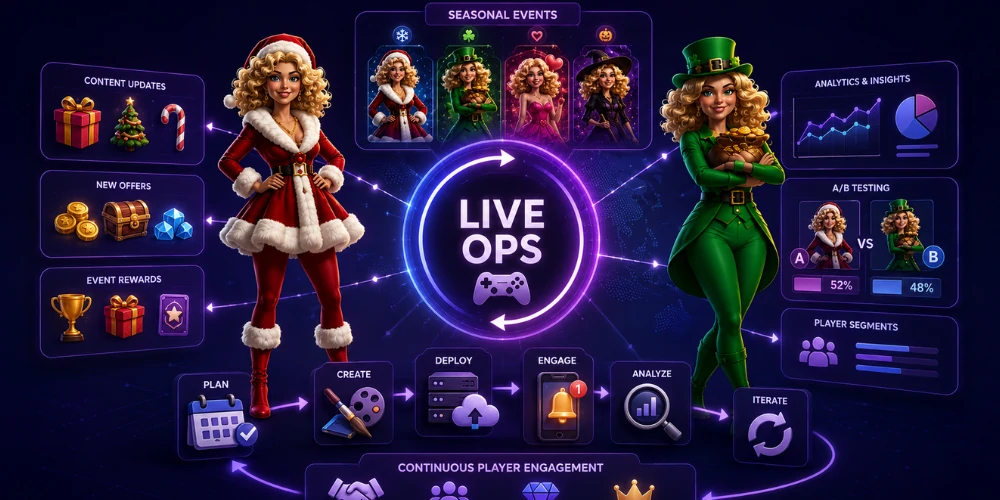
LiveOps Outsourcing in 2026: What It Costs, What It Covers, and When You Need It
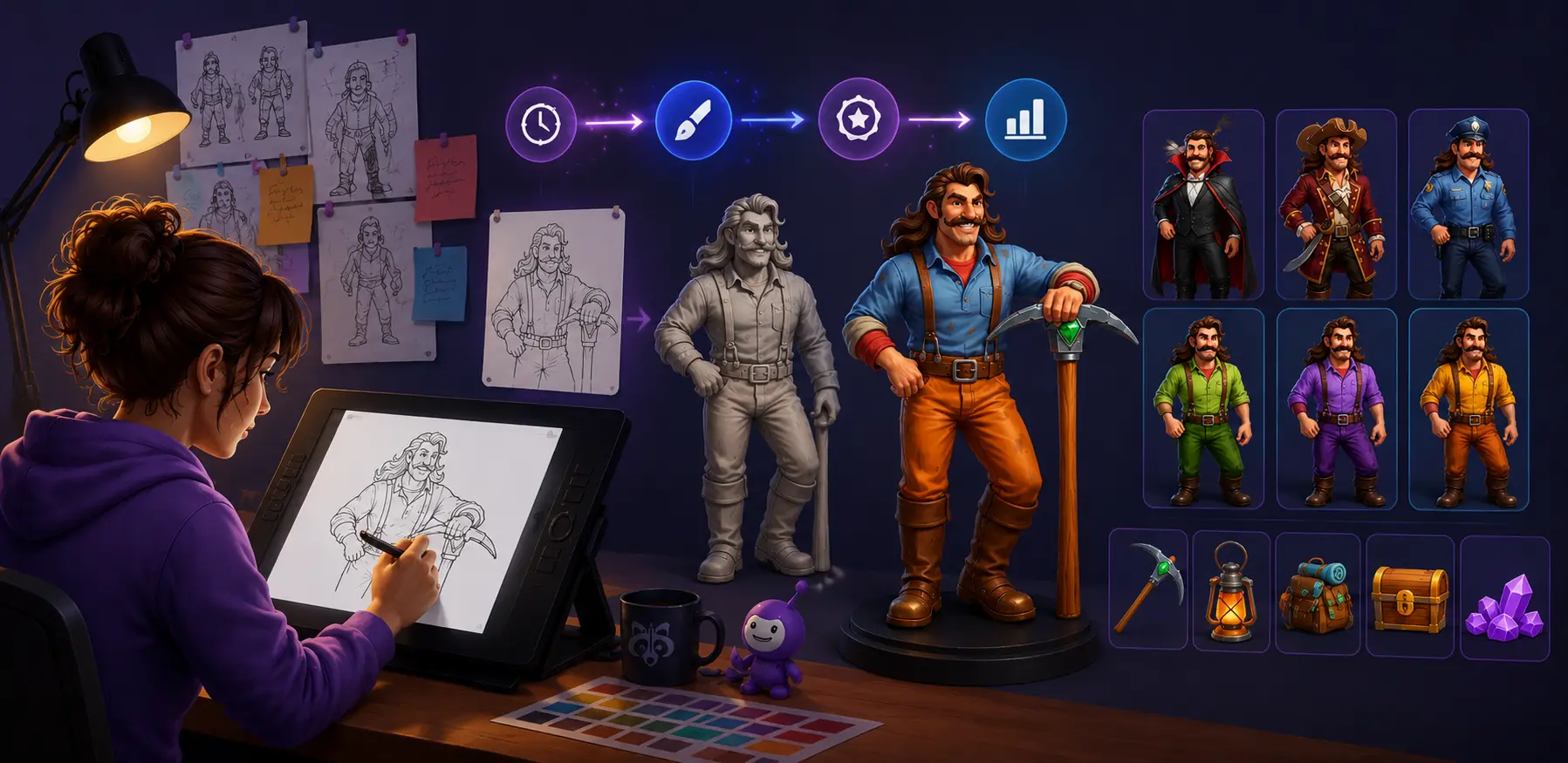
How AI Changes Game Art Outsourcing: Production Time, Costs, and What It Means for Your Project
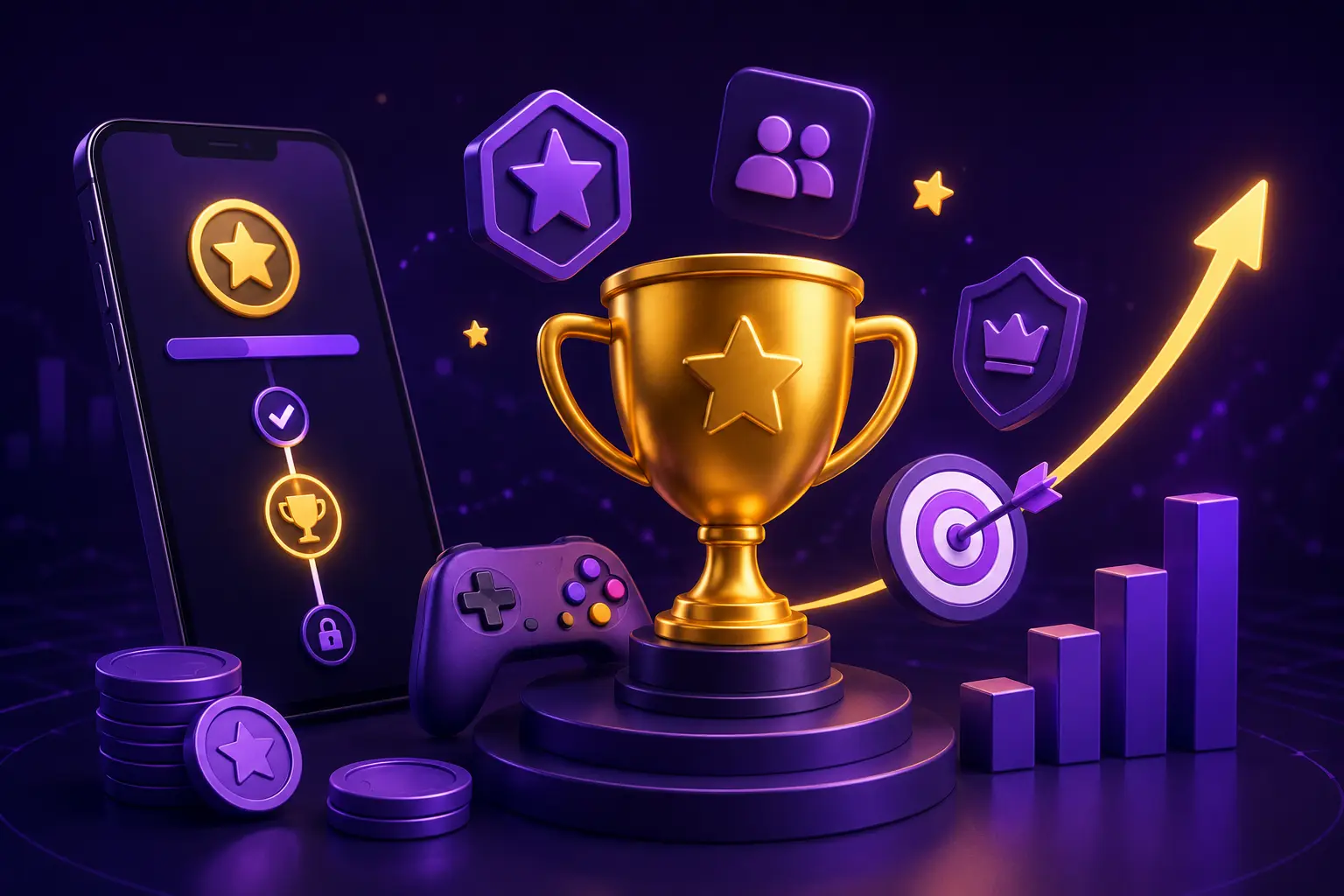
Comprehensive Guide to Gamification for Business: Benefits, Examples, and Development Strategies
Game Publishing and Distribution: How to Choose the Right Publishing Partner for a Game
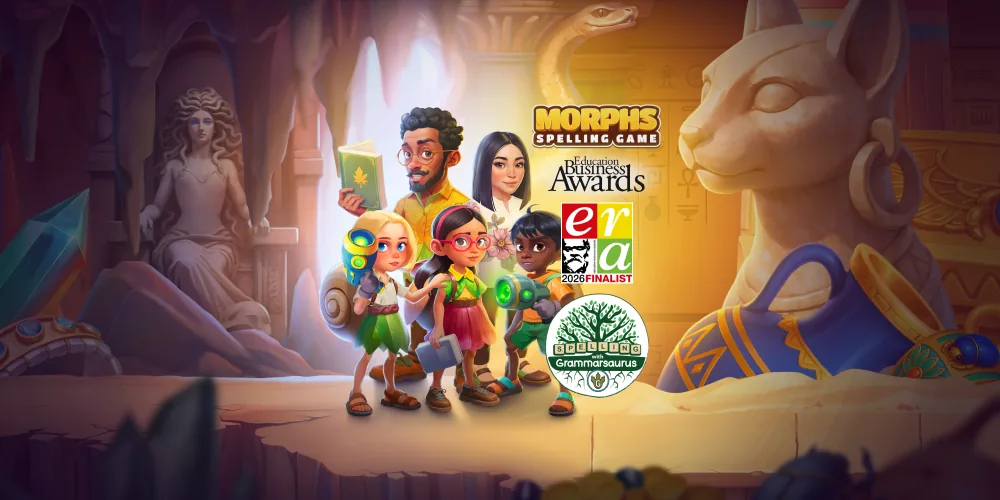
Grammarsaurus: Morphs Spelling Game Earns Industry Recognition in 2026 Awards
The Complete Guide to Game Art Outsourcing: Costs, Timelines, and How to Choose a Studio
Game Development Outsourcing: The Complete Guide for 2026
Top Game Development Studios for High-Quality 2D and 3D Art Production
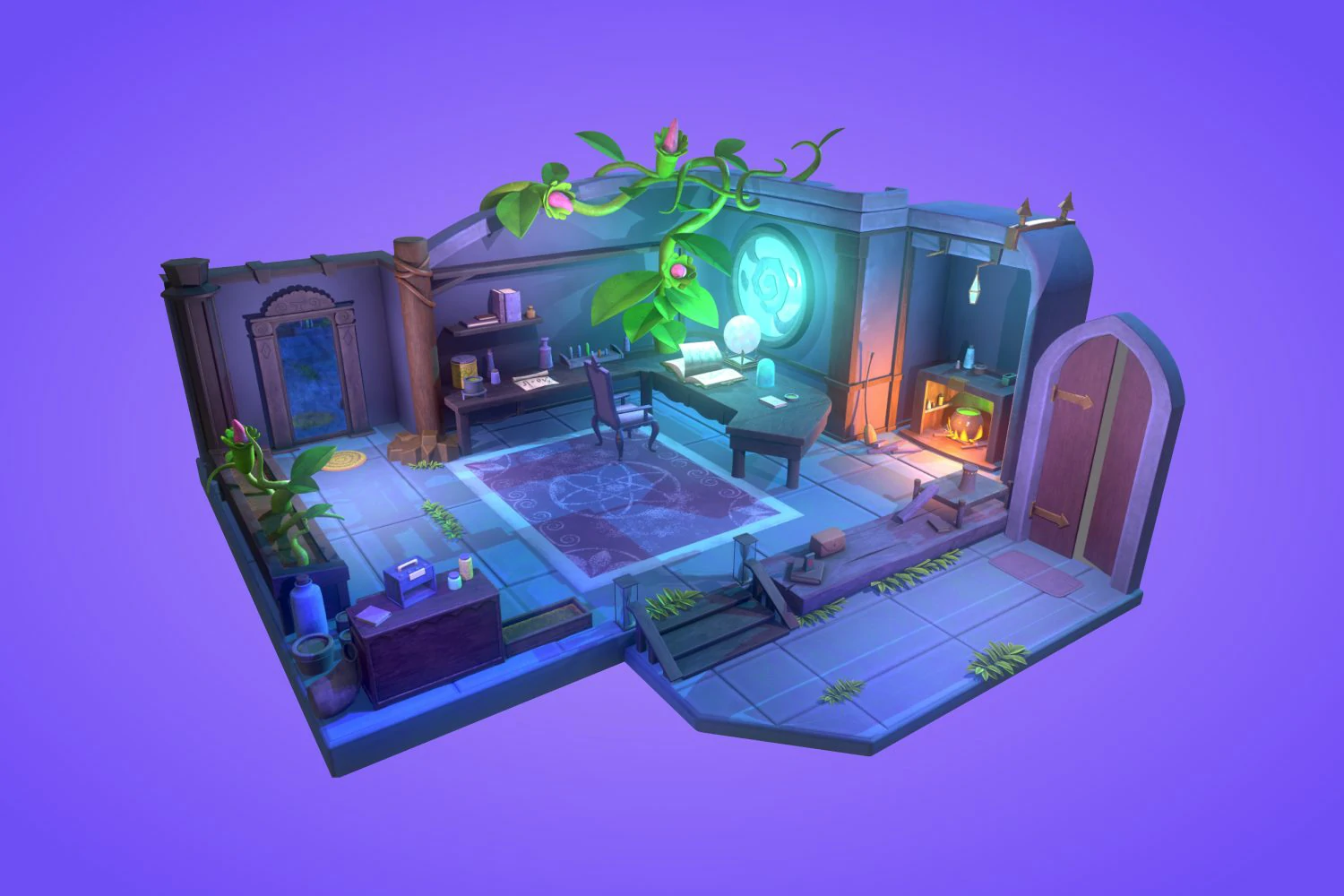
7 Top 3D Art Styles Dominating Games in 2026 (With Cost Breakdowns)
Top 10 US-Based Game Development Outsourcing Companies 2026

Video Game Mechanics: The Core of Engaging Gameplay